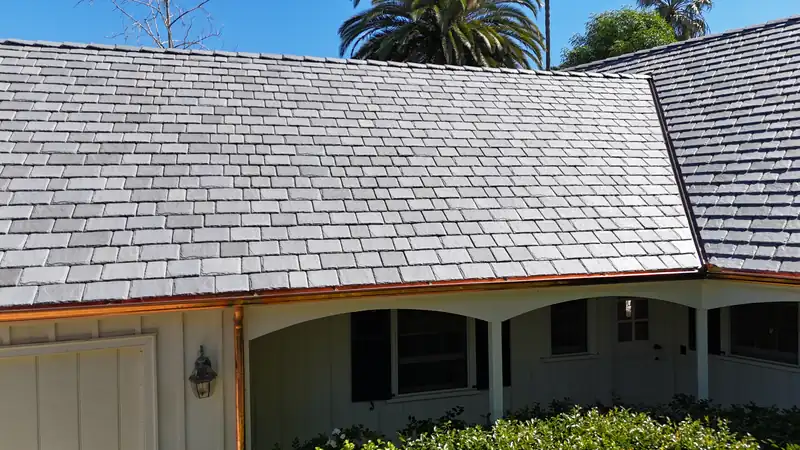
How the work is done
Copper Gutter Installation in Los Angeles
Copper gutter installation is mostly about the parts you never notice: the slope that keeps water moving, the hangers that hold the run straight, the joints at every corner and the downspouts that carry water away from the house. Our own crew handles all of it, from the first measurement to the last downspout. No subcontractors.
What a copper gutter system actually includes
When people picture copper gutters, they picture the long run along the eave. That is the most visible part, but a working system has several pieces, and each one matters:
Gutter runs along each eave that collects water, sized for the roof area that drains into it.
Corners (inside and outside miters) where two runs meet around the house.
End caps that close each run.
Outlets, the openings in the bottom of the gutter where water drops into a downspout.
Hangers that hold the gutter to the fascia or roof edge at a steady pitch.
Downspouts and their elbows, which bring water down the wall and away from the foundation.
On a copper system, all of those parts should be copper or a metal that is compatible with it. Copper reacts with some other metals, aluminum and galvanized steel in particular, when water connects the two. Keeping the whole system in copper avoids that reaction and means every piece weathers to the same color over time.
Step one: reading the house
Every copper gutter installation in Los Angeles starts with a walk around the house. We look at a few things before talking about gutters at all:
- The fascia and roof edge. Gutters hang on the fascia board or on the roof edge. If that wood is soft, split or out of line, a new gutter will not sit straight on it. We point out anything we see before work starts.
- Where water goes now. Stains on walls, worn soil below the eaves and puddles near the foundation tell you where the current system is failing.
- Roof areas and valleys. A valley can send a large share of a roof's water to one short stretch of gutter. Those spots need an outlet nearby.
- Where downspouts can go. A downspout needs a clear path down the wall and somewhere sensible to discharge, away from the foundation, walkways and the neighbor's yard.
Los Angeles gets most of its rain in a handful of winter storms. Gutters can sit dry for months and then have to move a lot of water in a short time. Planning for those heavy days, not the average one, is what keeps water off the walls and out of the foundation.
Step two: planning the runs
With the house read, we lay out the system. That means deciding how long each run is, where it breaks, which way it slopes, and where each outlet and downspout goes. A few rules of thumb guide the layout:
- Long runs are often pitched from the middle toward outlets at both ends, so water never has to travel too far.
- Outlets sit close to valleys and inside corners, where water arrives fastest.
- Downspouts go where they are useful and also where they look deliberate, lined up with corners and architectural features rather than dropped wherever is easiest.
The pitch itself is small, enough for water to drain, not so much that the gutter looks crooked against the roofline. On a copper system, where the gutter is a feature of the house, getting that balance right matters for looks as much as for drainage.
Step three: preparing the edge
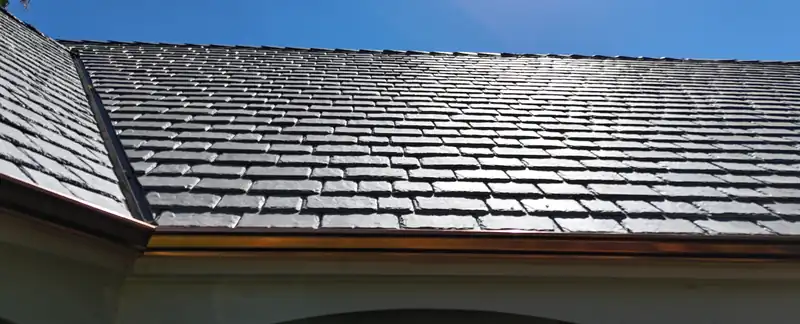
Any old gutters come down first, along with their hangers and fasteners. That exposes the fascia, so it is the right moment to deal with damaged wood or loose trim. We will show you what we find and talk through it with you before the copper goes up, because hanging a new gutter on a rotten board only hides a problem for a while.
Step four: hanging the copper
This is the part you see in the photos on this site. On our March 2026 copper job, the crew set long sections of copper gutter on stands at the curb, carried each run to the house, and hung it along the eaves, including tight stretches beside a brick chimney.
A few details separate a copper gutter that looks right in ten years from one that sags or leaks:
- Hanger spacing. Hangers close enough together to hold the run straight, including under the weight of water and debris.
- Joints. Corners, end caps and outlets on copper systems are traditionally soldered, which makes a durable, watertight joint that weathers with the rest of the gutter.
- Expansion. Metal moves with heat. Long copper runs need room to expand and contract without tearing a joint loose.
- Clean lines. The gutter should follow the roofline cleanly from the street, which is why the planning step matters.
Thinking about copper gutters? Talk it through with the crew that installs them.
Call (424) 328-6560Step five: downspouts and finishing
Downspouts are where a gutter system succeeds or fails. A good gutter that empties next to the foundation just moves the problem a few feet. We set downspouts so water leaves the house and the walkways, using elbows to direct it where it should go.
When the copper is up, the crew cleans the site, removes the old materials and walks the finished work with you. Because our own crew does the whole job, there is no handoff between a gutter company and someone else, and nobody to point at when a question comes up.
How long a copper gutter installation takes
It depends on the house: the number of eaves, corners, stories and downspouts, and whether any fascia needs attention. The job on this site took our crew three days, from the first copper on the stands to the finished gutters around the chimney. We give you a written scope and a realistic schedule after we have seen the house.
Why copper changes color after installation
New copper is bright, almost pink. Within weeks to months it begins to darken to a brown and bronze tone, and over many years it can move toward green. In the dry Los Angeles air, that last stage tends to come slowly, and sheltered stretches of gutter may stay brown far longer than exposed ones. Some people love the bright copper and others look forward to the brown. Either way, the change is a natural protective layer, not a sign that anything is wrong.
Who installs your gutters
Copper Gutters Los Angeles is operated by Eclipse Remodeling & Roofing Inc, a licensed California contractor (CSLB #888710) working on Los Angeles homes since 2006. We do residential work only, and our own crew does it. If you would like to talk through a copper gutter installation for your house, call (424) 328-6560.
Want to compare materials before you decide? Our copper vs aluminum gutters guide covers cost factors, lifespan and maintenance, and the half-round copper gutters page explains the two main profiles.
Estimates
Talk to the crew that builds it
Tell us about the house, the eaves and what is draining there now. We will come out, look at the fascia, the roofline and where the water needs to go, and give you a written scope for copper gutters and downspouts.
(424) 328-6560Questions Los Angeles homeowners ask
How much does copper gutter installation cost in Los Angeles?
Copper costs more than aluminum or steel, and the price of any job depends on the length of the runs, the number of corners and downspouts, the height of the house and the condition of the fascia. We give you a written price after seeing the house rather than quoting a number by the foot over the phone.
Can copper gutters be installed on any house?
Most houses can take copper gutters. What matters is the condition of the fascia or roof edge they hang on and a sensible place for downspouts to discharge. If the fascia needs work, we will tell you before the copper gutter installation starts.
Do copper gutters need special hangers and downspouts?
They should be copper or a compatible metal. Copper reacts with aluminum and galvanized steel when water connects them, so mixing metals can corrode the other parts. Keeping the system in copper also means it all ages to the same color.
How are the joints on copper gutters sealed?
Joints on copper gutter systems are traditionally soldered, which creates a strong, watertight seam that weathers along with the copper.
Do you use subcontractors for gutter work?
No. Our own crew does the work, from measuring to hanging to setting downspouts. See our about page for more on how we work.